|
Jean Pronovost is a modern-day adventurer
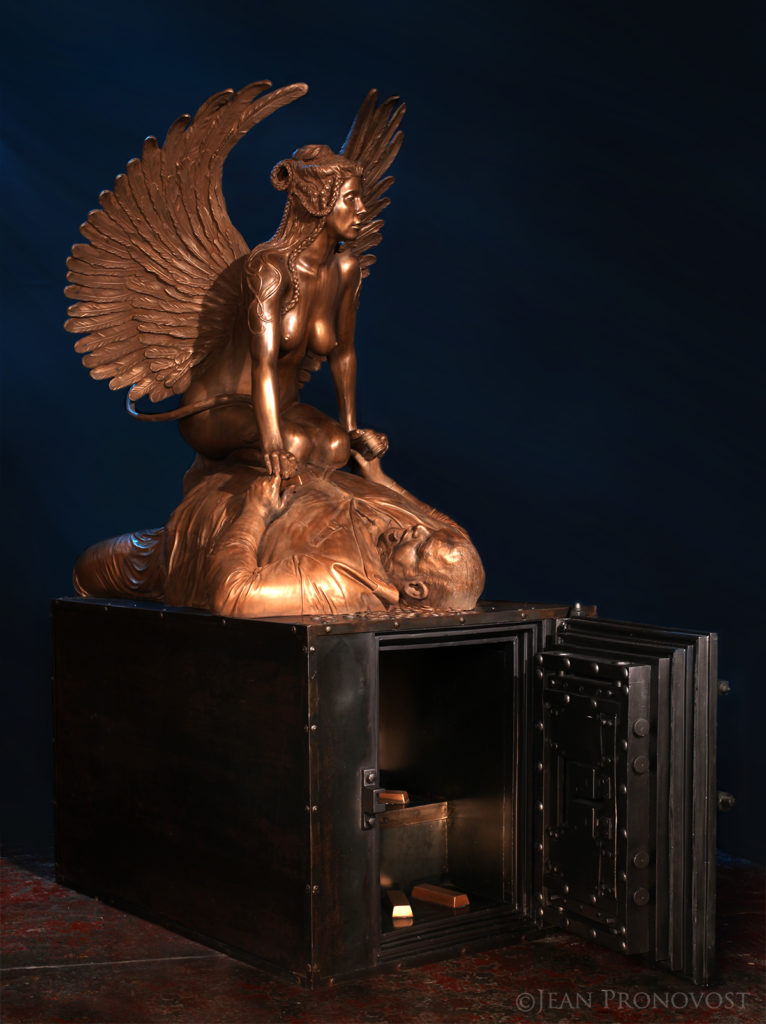
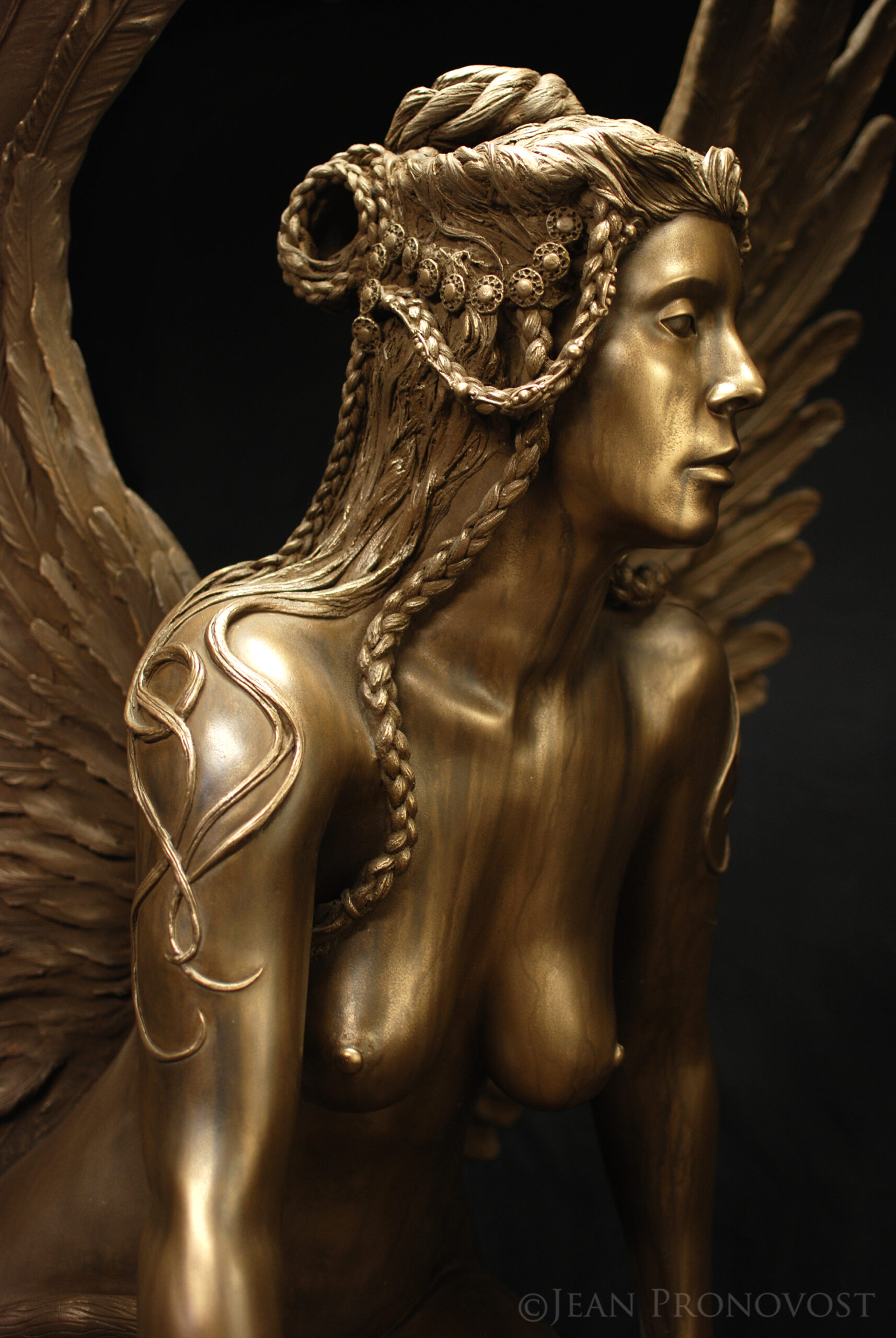
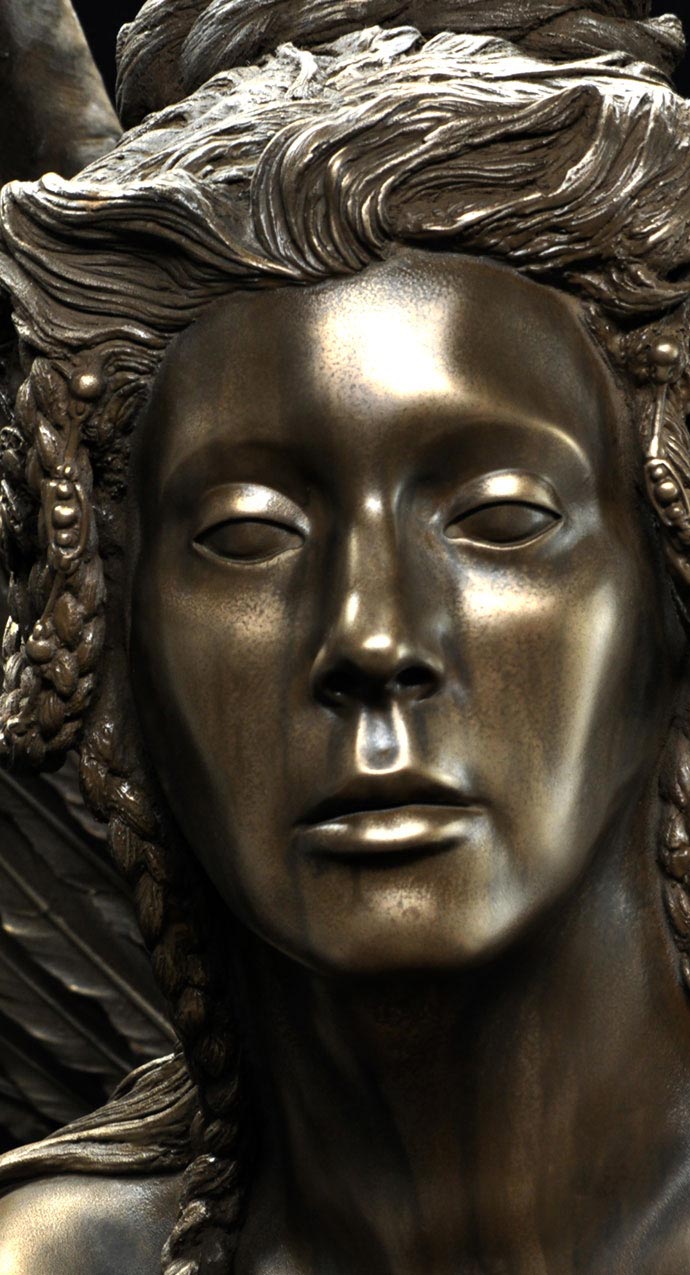
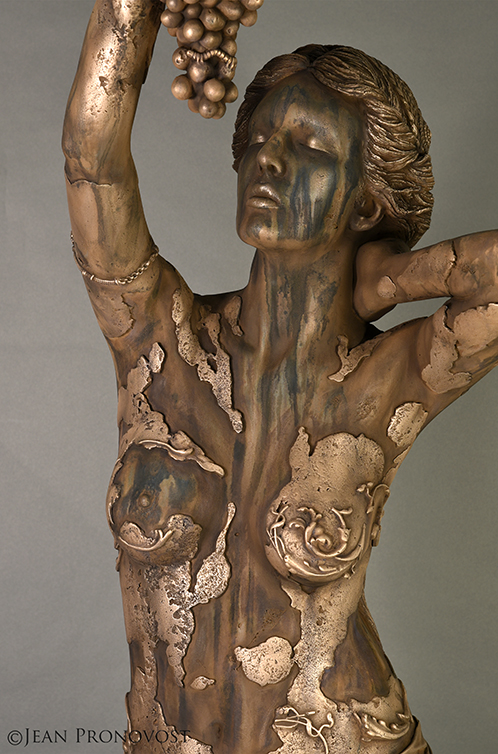
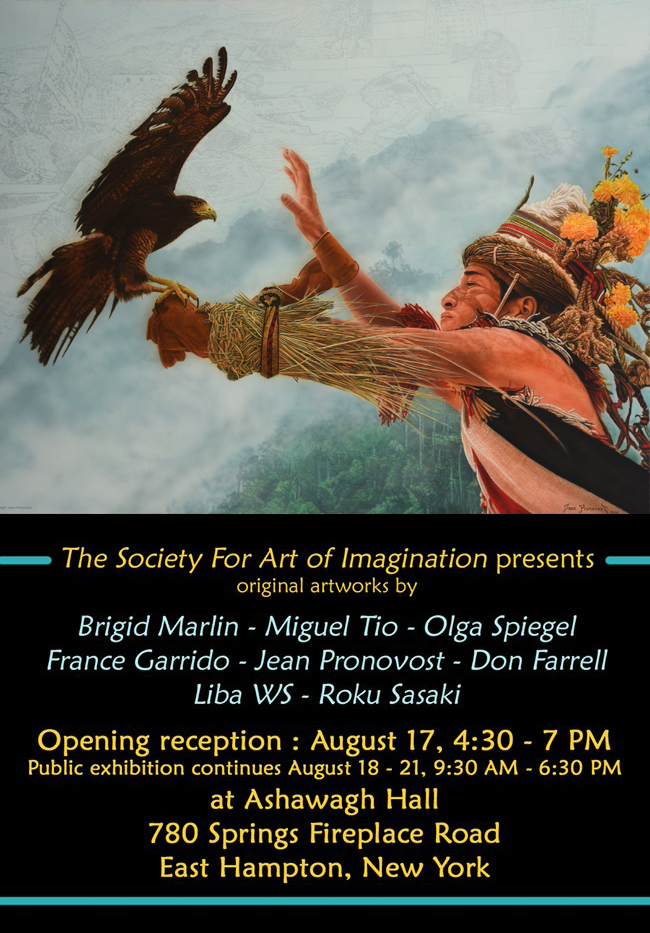
From his Montreal apartment, he travels from civilization to civilization, from era to era. With the stroke of a paintbrush, he transports the viewer from an Inca legend, or plunges us into the urban jungle. With the movement of a palette knife, he invokes forgotten gods. The powerful realism of his paintings and sculptures reveal a world where ancient symbols discover new meaning.
Jean Pronovost does not inhabit an archaic universe, nor does he concern himself with an obsolete sense of spirituality. On the contrary, this passionate student of anthropology and ethnology, who has had the opportunity to work with great masters like Mark Prent, and Alfredo Cardenas, and who attracted the attention of esteemed connoisseurs such as Leslie Barany, H. R. Gigers agent, adheres to an expansive and progressive post-modern aesthetic.
The exhibition "Le ventre de l'etre" represents the completion of an aesthetic quest and of the artists visual explorations into the human condition. The show features a selection of works executed over a period of eight years. In the works, the iconography of the past is used for instructive ends, in the sense that Pronovost work seeks to question contemporary values.
For example, in the painting entitled "Le Ventre de l'etre," (also the title of the exhibition) Jean Pronovost's works are not bound by notions of space or time, as he juxtaposes an image of a crocodile, appropriated from a Mayan tradition next to a series of New York skyscrapers. This type of image-collage adheres to a post-modern framework in the way that it combines images from various sources to create entirely new images. They can be read like a book, can be figured out, and are present in all of us. "Le vendre de l'etre" takes the viewer from Europe to Africa, from the cradle of our civilization to the subways of New York. The viewer is present at the same time as the Apogee, and to witness the decadence of a society which gropes between praiseworthy principles inherited through history and a commodity culture that destroys it piece by piece.
Next >>>
|